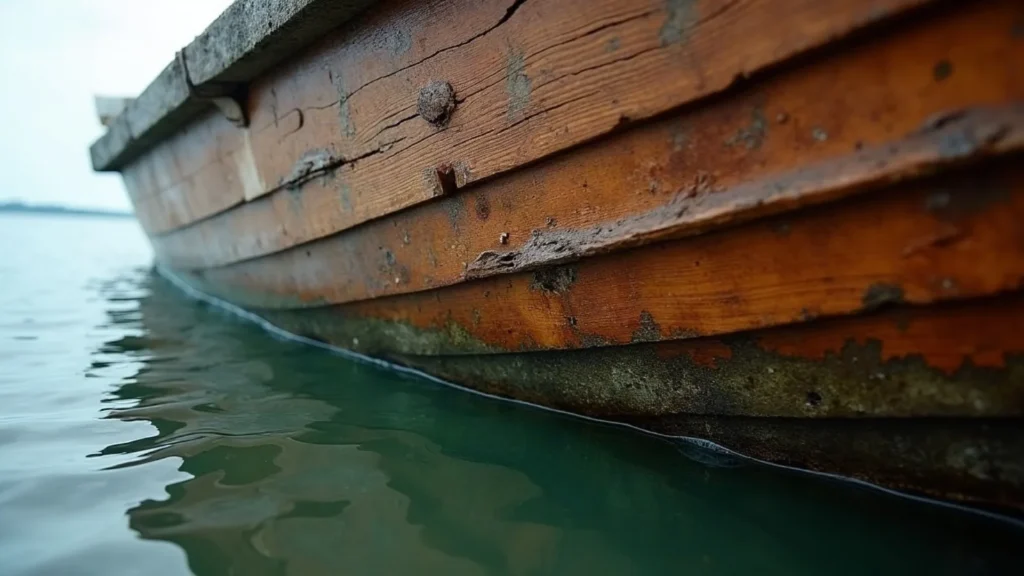
A timber-hull survey is only as good as the access it is given. The most common defect in inspections on this coast is not the surveyor’s skill — it is that the vessel was never opened enough for anyone to see structure. Bira Shipyard’s role is to prepare the hull so an inspection reaches the things that decide value, and to produce a written record an owner can act on afterwards.
Two different jobs
Pre-purchase inspection
Establishes whether the asking price reflects the hull’s real condition, and what the first three years of ownership will cost. The output is a negotiating document as much as a technical one.
Pre-refit condition report
Establishes the true starting point of a refit so a scope can be written against facts. This is the survey that prevents a fixed-price refit becoming a dispute.
What gets inspected
| Area | Method | What it reveals |
|---|---|---|
| Planking | Percussion sounding, probing, moisture assessment | Voids, softness, previous repairs, over-caulked seams |
| Fastenings | Representative sample withdrawal by zone | Wastage patterns and whether renewal is zonal or systemic |
| Frames and floors | Visual and probe access through ceiling openings | Heel decay, failed sisters, bilge-water damage |
| Stem, transom, keel | Direct inspection at joints and end grain | The failures that are expensive and easy to miss |
| Deck and beams | Sounding, leak tracing at fittings and margins | Fresh-water ingress paths into structure |
| Stern gear | Shaft, bearing, seal and alignment check | Vibration causes and future engine-work scope |
| Systems | Visual, function test where safe | Wiring condition, tankage, bonding, seacocks |
The preparation that makes a survey worth paying for
A vessel presented for survey should be hauled, washed and dry; ceiling panels removed in agreed locations; bilges cleaned so what is under the water is visible; and access created to engine bearers, tank tops and the ends of the hull. This preparation is work, and it is the difference between a report that says “not accessible” a dozen times and a report that answers the question you paid to have answered.
Access refusals are data
If a seller declines to allow a hull to be hauled and opened for inspection, that is itself a finding. It does not prove anything is wrong — but it does mean any price agreed is being agreed blind.
How findings are written
Findings are recorded by location with dated photographs, then sorted into three plain categories: act now, act within a season, monitor. This structure exists because unsorted defect lists paralyse owners — thirty observations of equal weight make it impossible to plan. The priority sorting is where judgement is added, and it is stated as judgement rather than presented as certainty.
Where the report leads to work, it becomes the base document for the refit scope or the repair cut list, so nothing has to be re-established from scratch.
What a condition record does not do
It does not guarantee that nothing else will be found once work starts — on a timber hull, opening one area routinely reveals the next. It does not substitute for an independent surveyor’s appointment where a bank, insurer or class society requires one. And it does not value the vessel; condition and market value are related but separate questions, and conflating them is how buyers end up disappointed on both.
Arrange an inspection
Tell the desk whether this is pre-purchase or pre-refit, the vessel’s location, and whether haul-out access has been agreed. Preparation is quoted separately from inspection so nothing is hidden inside a single figure.
- WhatsApp: +6281139414563
- Email: bd@juaraholding.com
- Quotations: issued in USD after a written scope and a hull inspection.