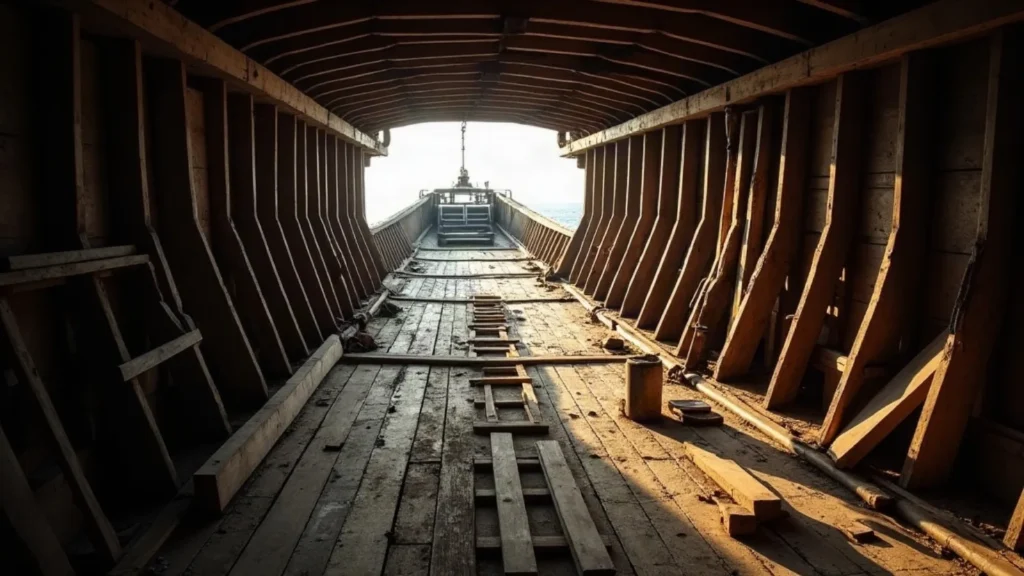
A timber refit is a discovery process disguised as a construction project. The scope written before haul-out is a hypothesis; the scope that matters is the one written after the hull is open and sounded. Bira Shipyard runs refits in that order deliberately — structure established first, then systems, then joinery, then finish — because every other sequence ends with good work being torn out to reach bad timber.
How a refit is structured here
The programme is split into four phases with a decision gate between each. An owner can stop, reduce or extend at a gate; what is not available is discovering at week nine that the interior went back in over a soft frame.
| Phase | What happens | What the owner receives |
|---|---|---|
| 1. Open and record | Haul-out, wash, sounding, selective removal of ceiling and sheathing to reach structure. | Photographic condition record and a findings list. |
| 2. Structure | Planking, frames, floors, fastenings, deck beams, stem and transom work as found. | Priced scope, then dated progress reporting. |
| 3. Systems | Engine alignment, shaft and stern gear, tankage, plumbing, electrical, deck gear. | System-by-system sign-off, not a single lump. |
| 4. Joinery and finish | Interior, sole, cabinetry, deck finish, coatings, rig and detail. | Handover record listing replaced, repaired and deferred items. |
What usually drives a Bira refit
Three patterns account for most of the work that arrives on this foreshore. The first is a liveaboard or expedition vessel that has run hard for several seasons in the Flores Sea and needs structure, tankage and systems addressed together. The second is a hull bought second-hand where the survey found more than the price assumed. The third is an owner who has decided to stop deferring — replacing fastenings, renewing garboard planks and resolving a chronic leak rather than pumping around it for another year.
In all three, the failure mode is the same: cosmetics get funded and structure gets postponed, because cosmetics are visible and structure is not. Planning a liveaboard refit at a Bira South Sulawesi shipyard works when the budget is allocated in the opposite order.
Change orders, honestly handled
A change order is not a sales device. It is the only mechanism that lets a fixed scope survive contact with an opened hull. The discipline the desk applies is simple: nothing outside the agreed scope is started without a written description, a photograph of the reason, a price, and the owner’s approval. Small items are batched weekly so an owner is not fielding messages daily; anything structural or safety-related is raised immediately.
The rule that saves money
Never approve finish work over structure that has not been signed off. It sounds obvious on paper and it is the most commonly broken rule in timber refitting, because finish work is what makes a project feel like it is progressing.
Timber, labour and lead times
The advantage of refitting on this coast is access to shipwrights who work traditional timber construction as a living trade rather than a heritage exercise, and to timber supply chains that still handle boat-grade stock. The constraint is that suitable large-section timber is not always sitting in a shed waiting. Where a scope requires long planks, grown frames or specific species, lead time is part of the programme and is stated as such at scope stage rather than discovered in week three.
Where a job crosses into new construction rather than repair — a replacement hull, or a substantially new vessel — that is a different discipline with a different contract, described on the new-build supervision page.
Reporting for owners who are not on the beach
Most owners cannot sit in Bulukumba Regency for four months, and should not have to. Reporting is therefore built into the programme: dated photographs against the scope line items, a weekly written note describing what moved and what did not, and immediate escalation for anything that changes the budget or the timeline. This is the same reporting discipline used for yard project management generally.
Scope a refit
Send the vessel’s history, last survey, known problem areas and what you want the boat to do for the next five years. The scope is written from the intended use backwards.
- WhatsApp: +6281139414563
- Email: bd@juaraholding.com
- Quotations: issued in USD after a written scope and a hull inspection.